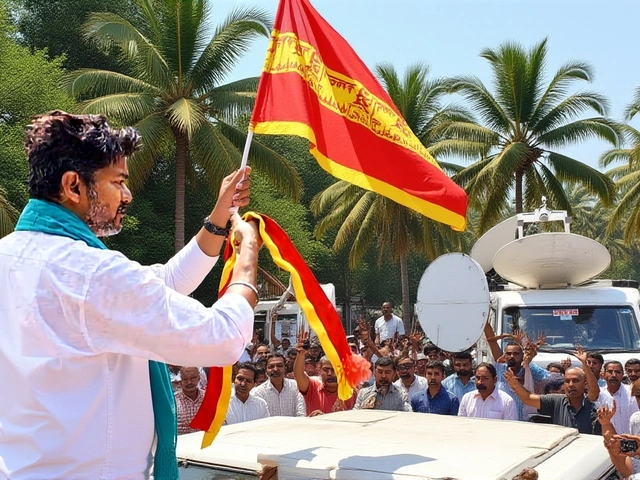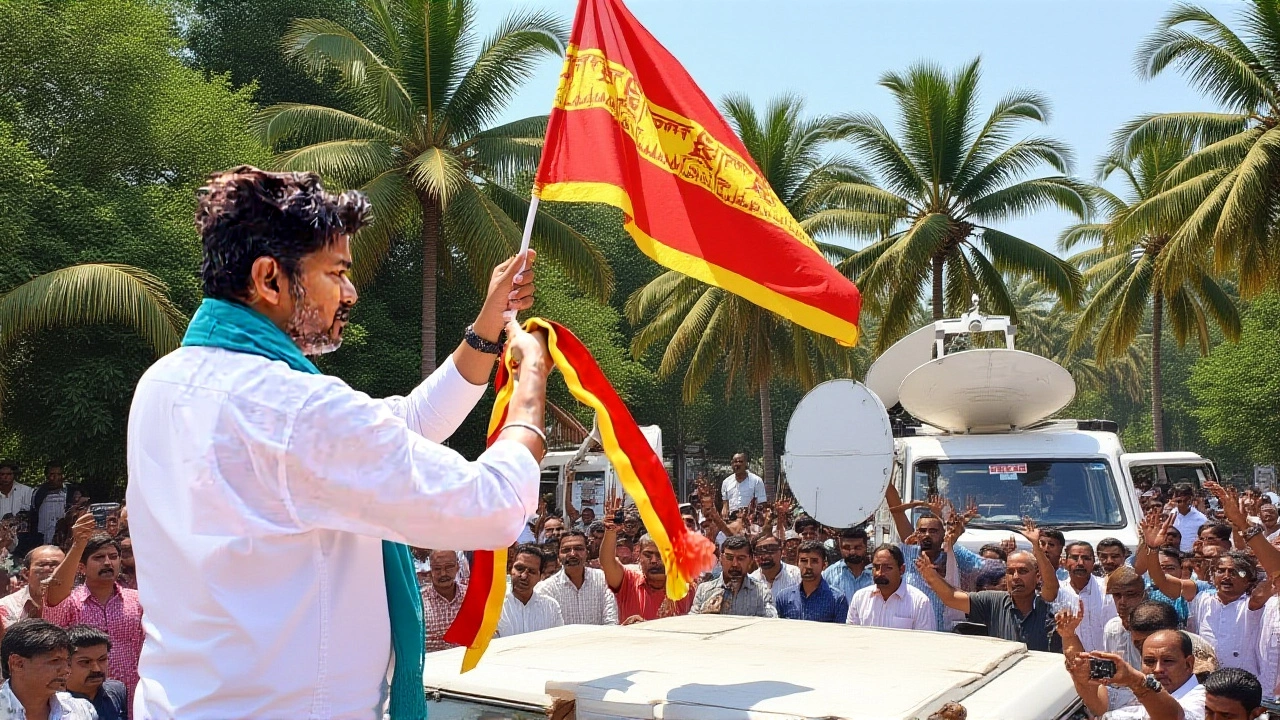
When Joseph Vijay Chandrasekhar, the superstar known globally as Thalapathy Vijay, announced his entry into politics, skeptics called it a fleeting stunt. But on Monday morning, those doubts were swept away by a tidal wave of votes. His party, Tamila Vettri Kazhagam (, or TVK), has emerged as the single largest force in Tamil Nadu, shattering decades of Dravidian political monopoly.
The results from the Tamil Nadu Assembly Elections 2026Chennai are not just a win; they are a realignment. For the first time in history, a film star’s party has outpaced both the ruling Dravida Munnetra Kazhagam () and the opposition All India Anna Dravida Munnetra Kazhagam (). The question now isn't whether Vijay will rule, but how he will govern a state that has never seen anything like this before.
A Landslide in Real-Time
Here’s the thing about Indian elections: trends can be misleading until the final count. But what unfolded in Tamil Nadu was undeniable. By mid-morning, TVK workers were celebrating across the state, blowing whistles—a nod to Vijay’s iconic song "Whistle Podu"—in a display of raw enthusiasm that television cameras couldn’t ignore.
The numbers tell a stark story. Out of 234 assembly seats, TVK held a lead in 108 constituencies at the peak of the counting process. That’s a staggering margin over the AIADMK, which trailed with 69 leads, and the incumbent DMK, which managed only 57. To put that in perspective, the magic number for forming a government is 118. While TVK fell short of an outright majority, being just 10 seats away is a position of immense leverage. It means Vijay doesn’t need to beg for allies; he can pick them.
Vijay himself secured his seat in Tiruchirappalli (East) with a comfortable lead of over 3,000 votes. It wasn’t a landslide in absolute terms compared to some strongholds, but it was enough. It signaled that even in a competitive constituency, his brand value translated directly into electoral capital.
Beyond the Superstar Charm
Turns out, this victory wasn’t just about box office records. Critics had argued that Vijay’s fan base would vote for him personally but not necessarily for his party’s manifesto. The data suggests otherwise. Analysts point to "solid planning" and "precise strategy" rather than mere stardom.
TVK targeted urban youth and the disillusioned middle class—voters who felt alienated by the traditional dynastic politics of the DMK and AIADMK. They campaigned on clean governance, digital transparency, and economic reform. It was a pitch that resonated. As one political observer noted, "This isn’t just a celebrity win. It’s a rejection of the old guard."
The contrast with previous celebrity entries into politics is sharp. Unlike other actors who joined existing parties, Vijay built a new structure from scratch. He recruited local leaders, avoided controversial alliances initially, and maintained a disciplined campaign machine. The result? A cohesive bloc that stood tall against two giants.
The Kingmaker Dilemma
But wait—the math still leaves room for maneuvering. With 108 seats, Vijay is the kingmaker, but also potentially the king. He faces a choice: form a coalition or try to cross the 118-mark through post-poll support agreements.
The DMK, led by Chief Minister M.K. Stalin, is likely scrambling to secure allies. Historically, smaller parties have swung between the two major Dravidian outfits. Now, they look toward Chennai’s new boss. The AIADMK, weakened by internal fractures, may find itself irrelevant if it cannot offer a viable alternative to either Vijay or Stalin.
This creates a unique power dynamic. In past hung assemblies, the larger party usually set the terms. Here, TVK’s proximity to majority gives Vijay unprecedented negotiating power. He could demand key ministries, policy concessions, or even a caretaker role while seeking stability.
What This Means for Tamil Nadu
The ripple effects extend beyond Chennai. This election signals a shift in voter behavior across South India. If a non-traditional leader can win big in Tamil Nadu, similar movements may gain traction in Karnataka, Kerala, and Andhra Pradesh. The era of invincible regional dynasties might be ending.
For the common citizen, the promise is change. Vijay’s speeches focused on education, healthcare, and job creation. Whether these promises translate into action remains to be seen. But the mandate is clear: voters want fresh faces and fresh ideas.
In the coming weeks, watch for backroom deals. Who will join TVK? Will any small parties defect? Or will Vijay stand alone, forcing a hung assembly? One thing is certain: Tamil Nadu politics has been rewritten. And the author is no longer a politician by birth—but by choice.
Frequently Asked Questions
Did TVK win an outright majority?
No, TVK did not secure an outright majority. They led in 108 out of 234 seats, falling short of the 118-seat mark required to form a government independently. However, their position as the single largest party gives them significant leverage in coalition talks.
How does TVK compare to DMK and AIADMK?
TVK significantly outperformed both traditional rivals. They led in 108 seats, compared to AIADMK’s 69 and DMK’s 57. This marks the first time a third-party entity has surpassed both major Dravidian parties simultaneously in a state election.
Who is Thalapathy Vijay?
Joseph Vijay Chandrasekhar, popularly known as Thalapathy Vijay, is one of Tamil cinema’s biggest superstars. He founded the Tamila Vettri Kazhagam (TVK) party in 2024, transitioning from entertainment to politics to address social issues he believes require direct political intervention.
What happens next after the election?
Vijay must decide whether to seek post-poll alliances to reach the 118-seat majority threshold or attempt to form a minority government with outside support. Negotiations with smaller parties and independents will determine the next Chief Minister of Tamil Nadu.
Why is this election considered historic?
It breaks the decades-long duopoly of the DMK and AIADMK in Tamil Nadu politics. A film actor’s independent party becoming the largest faction represents a fundamental shift in voter sentiment towards anti-incumbency and desire for non-traditional leadership.